
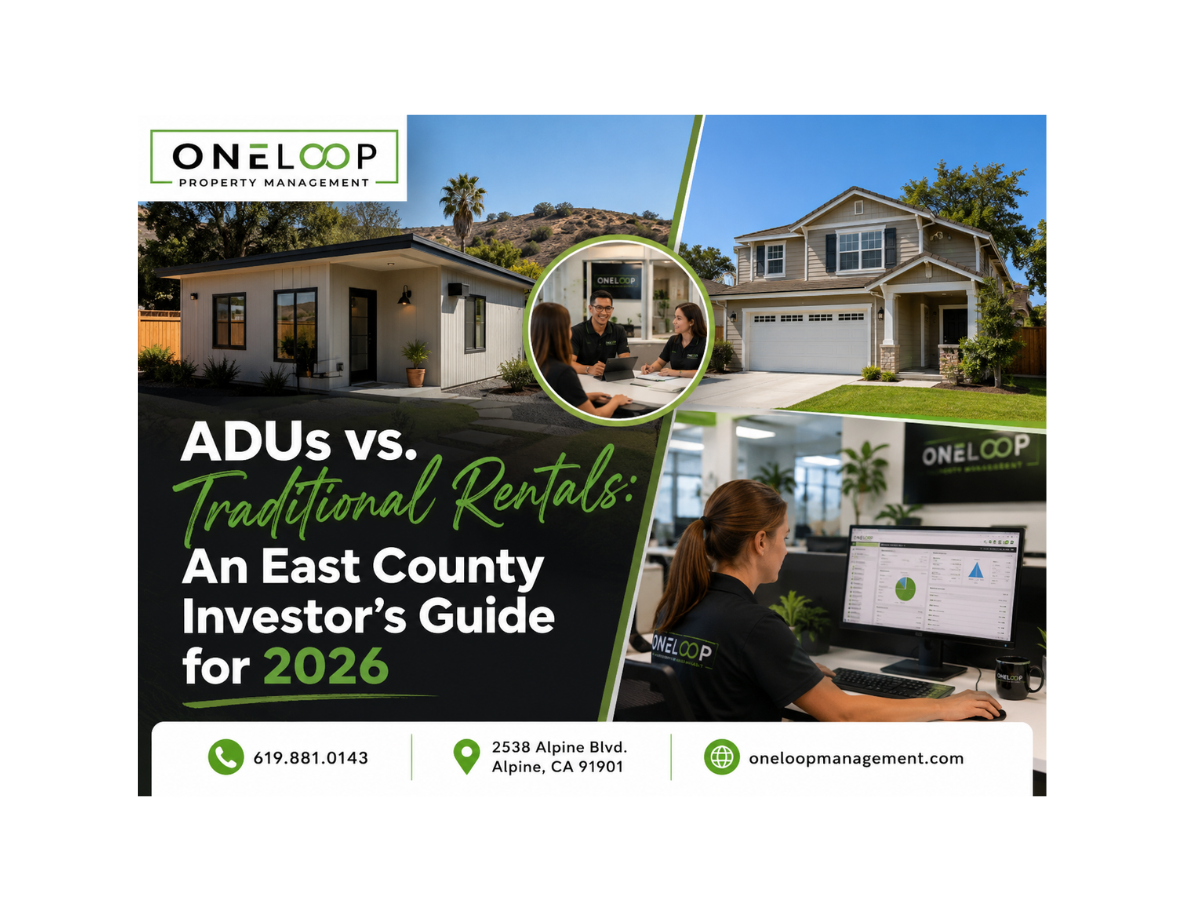
Should You Build an ADU or Invest in a Traditional Rental Property?
Real estate investors throughout East County San Diego are facing a new opportunity in 2026. As housing demand continues to outpace supply, property owners are looking for ways to generate more income from their investments while adapting to changing market conditions.
One strategy gaining significant attention is the addition of Accessory Dwelling Units (ADUs). At the same time, traditional rental properties remain one of the most reliable paths to long-term wealth building.
So which option makes more sense?
For investors in El Cajon, Santee, La Mesa, Lakeside, Lemon Grove, Spring Valley, Alpine, and surrounding East County communities, the answer depends on your goals, budget, and property situation.
Before making a major investment decision, it's important to understand how ADUs and traditional rentals compare in today's market.
What Is an ADU?
An Accessory Dwelling Unit, commonly known as an ADU, is a secondary residential unit built on the same lot as an existing home.
Examples include:
Detached ADUs
A separate structure built in a backyard or side yard.
Attached ADUs
An addition connected to the main residence.
Garage Conversion ADUs
Existing garages transformed into livable rental units.
Thanks to California's ongoing efforts to address housing shortages, ADUs have become increasingly popular among homeowners and investors looking to maximize the value of their properties.
How Do Traditional Rentals Differ?
Traditional rentals include single-family homes, condos, duplexes, and small multifamily properties purchased primarily for rental income and long-term appreciation.
Unlike ADUs, traditional rentals are standalone investment properties with their own land, financing, and ownership considerations.
While ADUs focus on maximizing an existing property, traditional rentals focus on expanding an investment portfolio.
Comparing ADUs and Traditional Rentals
Upfront Investment
One of the biggest advantages of an ADU is that you may already own the land.
Instead of purchasing another property, you can potentially create an additional income stream from your existing lot. This often results in a lower overall investment compared to buying a separate rental property.
Traditional rentals typically require a larger upfront commitment that may include:
Down payment
Mortgage financing
Closing costs
Property taxes
Insurance
For investors with available equity but limited cash reserves, an ADU may be the more accessible option.
Rental Income Potential
Both strategies can generate strong rental income, but they do so differently.
ADUs generally command lower monthly rents than full-sized homes. However, they often benefit from lower operating costs and strong demand from renters seeking affordable housing.
Traditional rentals usually generate higher gross rental income because they offer more space, additional bedrooms, and family-friendly layouts.
The key is to focus on net income rather than rent alone. A property generating higher rent isn't always the property generating higher profits.
Tenant Demand and Vacancy Risk
Rental demand remains strong throughout East County San Diego, but tenant preferences continue to evolve.
Many renters are prioritizing affordability, privacy, and location. This has created strong demand for well-designed ADUs, particularly among young professionals, retirees, healthcare workers, and remote employees.
Traditional rentals continue to attract families and long-term residents who often stay in place longer. While these properties may experience less turnover, they can sometimes take longer to fill when vacancies occur due to higher rental rates.
Both property types can perform well when marketed effectively and priced correctly.
Long-Term Appreciation
Traditional rentals have historically been favored by investors focused on portfolio growth and long-term appreciation.
Because they are standalone properties, investors benefit from appreciation of both the structure and the land.
ADUs, however, can also create significant value by increasing a property's income potential and overall market appeal.
Many buyers are willing to pay a premium for properties that include a legal ADU because of the flexibility and additional revenue opportunities they provide.
Which Option Makes More Sense in East County?
An ADU May Be a Better Choice If:
You already own a property with available space
You want to create an additional income stream
You are looking for a lower-cost investment opportunity
You want to increase the value of your current property
A Traditional Rental May Be Better If:
You are focused on building a larger portfolio
You want to own multiple income-producing assets
You have the capital to acquire additional properties
Long-term appreciation is your primary objective
Why Many Investors Are Choosing Both
Increasingly, East County investors aren't choosing one strategy over the other.
Many are combining traditional rentals with ADUs to diversify income sources and maximize returns.
For example, an investor may own a rental home in El Cajon while adding an ADU to create a second revenue stream on the same property.
This hybrid approach can improve cash flow while reducing dependence on a single rental unit.
The Management Challenges Investors Often Overlook
Whether you own an ADU or a traditional rental property, success depends on more than simply collecting rent.
Effective property management plays a major role in protecting your investment and maximizing profitability.
Some of the most common challenges include:
Finding Qualified Tenants
A thorough screening process can help reduce late payments, lease violations, and costly turnover.
Managing Maintenance Requests
Timely maintenance coordination protects property value and improves tenant satisfaction.
Rent Collection and Financial Tracking
Consistent systems help ensure reliable cash flow and accurate financial reporting.
Reducing Vacancy
Strategic marketing and competitive pricing can help minimize downtime between tenants.
These responsibilities often become more demanding as an investor's portfolio grows.
That's why many property owners throughout East County partner with OneLoop Property Management. Professional management allows investors to focus on growing their investments while experienced professionals handle the day-to-day operations.
Final Thoughts
There is no universal winner in the ADU versus traditional rental debate.
ADUs offer an excellent way to maximize existing property, create additional income, and increase overall property value. Traditional rentals remain a proven strategy for building long-term wealth and expanding a real estate portfolio.
The right choice depends on your investment goals, available capital, and long-term strategy.
For many East County investors, the most effective approach may be combining both options to create a more diversified and resilient rental portfolio.
Ready to Maximize Your Rental Investment?
Whether you're considering an ADU, evaluating a traditional rental property, or looking for ways to improve the performance of your existing investment, having the right management strategy is essential.
OneLoop Property Management helps property owners throughout East County San Diego streamline rental operations, attract qualified tenants, coordinate maintenance, reduce vacancies, and protect the long-term value of their investments.
Contact OneLoop Property Management today to learn how professional property management can help you get the most from your rental property in 2026 and beyond.